Blockchain Technology and Transparent Gaming in Greece
As a veteran within the high stakes world of digital entertainment, I have witnessed the evolution of the gambling industry from its rudimentary beginnings to the sophisticated, data driven ecosystem it is today. For years, the primary challenge facing online operators has been the intangible element of trust. Players often wonder if the virtual deck is truly shuffled or if the slot algorithms are operating fairly. In the modern Greek market, we are seeing a transformative shift as players demand more than just promises of fairness; they demand mathematical proof. This is why I am so passionate about the integration of decentralized ledgers and distributed systems. When you visit a forward thinking platform like https://myempirecasino3.gr/, you are seeing the first steps toward a future where the house edge is transparent and every outcome is verifiable on a public ledger. My experience in the industry has taught me that transparency is not just a moral obligation but a competitive advantage. In an era where skepticism is the default setting for many digital consumers, blockchain technology offers a bridge over the chasm of doubt.
The Traditional Trust Gap in Online Gambling
For decades, online casinos operated as black boxes. A player would click a button, a server in a remote location would generate a number, and the result would appear on the screen. While regulatory bodies like the Hellenic Gaming Commission (HGC) have done an excellent job of auditing these systems, the average player still had to take it on faith that the software was not manipulated. This is the trust gap. In my role as a casino representative, I have spoken with thousands of Greek players who are brilliant at math and skeptical by nature. They want to know the “how” and the “why” behind every losing streak.
Traditional Random Number Generators (RNGs) are highly secure, but they are centralized. This means the data sits on a server owned by the operator or the software provider. Blockchain technology disrupts this model by decentralizing the data. Instead of a single source of truth, we have a distributed ledger where information is mirrored across thousands of nodes. This makes it virtually impossible to alter historical data without detection. For the first time in history, we are moving from a “trust us” model to a “verify us” model. This is the essence of the transparency revolution in Greece.
Blockchain 101: Understanding the Distributed Ledger
To understand how blockchain creates transparency, we must first look at what it actually is. Imagine a digital notebook where every entry is written in permanent ink and every page is copied and handed to everyone in the room. If one person tries to erase an entry or change a number, their notebook will no longer match everyone else’s. The group will immediately know that the data has been tampered with. In the context of a Greek online casino, this notebook records every bet, every spin, and every payout.
The immutability of the blockchain is its greatest strength. Once a transaction is confirmed and added to a block, it cannot be changed. This provides a permanent, unalterable record of all activity. As an industry professional, I see this as the ultimate audit trail. It protects the player from unfair practices and it protects the operator from false claims of fraud. It is a win win situation that stabilizes the entire ecosystem. In Greece, where bureaucratic transparency has often been a topic of public debate, the arrival of a technology that is inherently honest is a breath of fresh air.
The Core of Transparency: Provably Fair Gaming
The most significant innovation brought by blockchain to the Greek gaming sector is the concept of “Provably Fair” gaming. This is a technical framework that allows a player to verify the randomness of every single game outcome they experience. It is not just a buzzword; it is a mathematical reality.
How Provably Fair Mechanics Work
The process involves three main components: a Server Seed, a Client Seed, and a Nonce. Before you start a game, the server provides a hashed version of its seed. Because it is hashed, you cannot see the actual number, but you have a digital fingerprint of it. You then provide your own Client Seed, which can be a random string of numbers or a phrase you choose. When the game begins, the Server Seed, your Client Seed, and the Nonce (the number of bets made) are combined to generate the result.
Once the game is over, the server reveals its unhashed seed. You can then use a third party verifier or a simple script to combine that seed with your own and check if the result matches the game you just played. If even a single digit was changed by the casino, the verification would fail. This puts the power of auditing directly into the hands of the Greek player. I have seen the eyes of veteran gamblers light up when they realize they no longer have to wonder if they were cheated. The proof is right there in the code.
The Psychological Impact on the Greek Player
In Greece, the concept of “Dikaiosyne” or justice is a fundamental cultural pillar. Greek players have a deep respect for fair play and a low tolerance for being misled. By implementing provably fair algorithms, we are aligning our digital products with these cultural values. It changes the relationship from a confrontation to a partnership. When a player knows the game is fair, they are more likely to enjoy the entertainment value of the casino even when they are not winning. They understand that the outcome was truly random and that they simply had a run of bad luck, which is a natural part of gambling. This transparency reduces the “tilt” and frustration that can lead to irresponsible gaming habits.
Smart Contracts: Automating Trust and Payouts
Another revolutionary aspect of blockchain technology in the Greek market is the use of Smart Contracts. These are self executing contracts with the terms of the agreement directly written into lines of code. In a casino setting, a smart contract can govern the entire betting process.
When you place a bet, the smart contract holds the funds in escrow. Once the outcome is determined by the provably fair algorithm, the contract automatically releases the winnings to the player or the stake to the house. There is no human intervention. There is no “processing time” for the withdrawal to be approved by a middleman. The code executes the payout the moment the conditions are met.
From my perspective as an operator, smart contracts eliminate the most common source of friction in our industry: withdrawal delays. We know that Greek players want their winnings quickly. By using blockchain based automation, we can provide instant liquidity. This is a massive leap forward from the traditional banking systems that can take days to clear a transaction.
Financial Transparency and Cryptocurrency in Greece
The use of cryptocurrencies like Bitcoin, Ethereum, and Tether is the most visible application of blockchain in Greek casinos. However, the benefits go far beyond just “digital money.” Cryptocurrency offers a level of financial transparency and security that traditional fiat currency cannot match.
Transaction Verification on the Public Ledger
Every transaction made with cryptocurrency is recorded on a public blockchain. This means a player can track their deposit from their personal wallet all the way to the casino’s treasury. Similarly, when a withdrawal is sent, the player can see the transaction moving through the network in real time. This eliminates the “where is my money?” anxiety that often plagues online gambling. In Greece, where banking regulations can sometimes be complex, having a borderless, transparent payment method is incredibly empowering for the player.
Enhancing Privacy and Security for Greek Users
Digital security is a paramount concern for anyone playing online. Traditional payment methods require you to share sensitive information like credit card numbers or bank account details. With blockchain based payments, you are only sharing your wallet address. This significantly reduces the risk of identity theft and data breaches.
Furthermore, blockchain encryption is the strongest in the world. As a representative of the industry, I have seen the devastating effects of cyber attacks on centralized databases. Blockchain’s decentralized nature means there is no single point of failure. Your funds and your data are protected by the collective power of the network. This provides a level of peace of mind that is essential for a high quality gaming experience.
Data Sovereignty and the Greek Player
In the current digital age, data is the new gold. Standard online casinos collect a vast amount of personal information, which they often store on centralized servers. Blockchain technology introduces the possibility of “Self Sovereign Identity.” This would allow Greek players to own their own data and choose exactly what information they want to share with an operator.
Imagine a world where you can verify that you are over 21 and a resident of Greece without having to upload a physical copy of your ID to a casino’s database. This can be achieved through “Zero Knowledge Proofs,” a blockchain related technology that allows one party to prove to another that a statement is true without revealing any information beyond the validity of the statement itself. I believe this is the future of KYC (Know Your Customer) in the Greek market. It respects the player’s privacy while still meeting the HGC’s strict regulatory requirements.
The Role of the Hellenic Gaming Commission (HGC)
We must acknowledge that the Greek market is one of the most strictly regulated in Europe. The HGC has done a fantastic job of creating a safe environment for players. However, the rapid pace of blockchain innovation can sometimes outstrip the pace of legislation.
In my professional opinion, the HGC is moving toward a more tech friendly stance. They recognize that blockchain can actually make their job easier. If a casino is operating on a transparent, immutable ledger, the regulator can audit the entire operation in real time without needing to visit a physical office or wait for reports to be filed. Blockchain provides a “Regulatory Oracle” that can feed live data to the commission, ensuring 100 percent compliance at all times. This is the ultimate goal of the “Transparent Gaming” movement in Greece: a perfect alignment between the player, the operator, and the regulator.
Overcoming the Barriers to Adoption in Greece
Despite the obvious benefits, blockchain adoption is not without its challenges. There is a learning curve for players who are used to traditional banking. Terms like “private keys,” “gas fees,” and “hot wallets” can be intimidating.
As a leader in this space, I see it as our responsibility to provide the education and the tools to make this transition as easy as possible. We are working on creating “Hybrid” platforms that offer the security and transparency of blockchain but with a user interface that is as simple as a standard mobile app. We want to hide the complexity of the math behind a beautiful, intuitive experience. In Greece, we have a saying: “Archi isymisi tou pantos” (The beginning is half of the whole). We are currently in that beginning stage, and our goal is to make the rest of the journey as smooth as possible for our community.
The Environmental and Social Impact of Blockchain Gaming
I often hear concerns about the energy consumption of blockchain networks. While this was a valid concern in the early days of Bitcoin, the technology has evolved. Most modern gaming blockchains use “Proof of Stake” or other energy efficient consensus mechanisms that consume 99 percent less power than traditional mining.
In Greece, we are acutely aware of the need for environmental sustainability. By choosing energy efficient blockchains, we can offer transparent gaming without compromising our commitment to the planet. Furthermore, blockchain can be used for social good within the gambling industry. For instance, it can be used to create a decentralized “Self Exclusion” list that works across all operators. If a player in Athens decides to take a break, their decision is recorded on the blockchain and instantly respected by every licensed casino in Greece. This is a level of player protection that was previously impossible to achieve.
The Future of the Greek Market: 2026 and Beyond
As I look into my crystal ball, I see a Greek market that is dominated by blockchain integration. By 2026, I expect that “Provably Fair” will be a mandatory requirement for any new game license issued by the HGC. We will see the rise of “Metaverse” casinos where you can walk through a virtual room, interact with other Greek players, and see the blockchain results being calculated in the air around you.
The integration of AI and blockchain will also lead to more personalized and transparent bonuses. Instead of a generic “Welcome Bonus,” you might receive a smart contract based reward that is tailored to your playing style and automatically pays out the moment you meet the requirements. The days of fighting with customer support over bonus terms will be a memory of the past. The code will be the arbiter, and the code is always fair.
My Expert Advice for Greek Players
If you are a player in Greece looking to embrace this new era, my advice is simple: stay curious but stay careful. The transparency of blockchain is only valuable if you know how to look at it. Take the time to learn how to use a blockchain explorer. Understand the basics of seed verification.
More importantly, only play on platforms that are transparent about their technology. If a casino says they are “on the blockchain” but they don’t provide a way to verify the games or see the transactions, they are not truly transparent. Look for the “Provably Fair” seal and look for operators who are willing to have a conversation about their tech stack. In the digital world, knowledge is your best defense and your greatest asset.
Building the Greek Community through Transparency
At the end of the day, a casino is a community. In Greece, we value our social connections and our integrity. By adopting blockchain, we are not just upgrading our software; we are upgrading our community standards. We are creating a space where the rules are clear, the outcomes are verifiable, and every player is treated with the same level of respect.
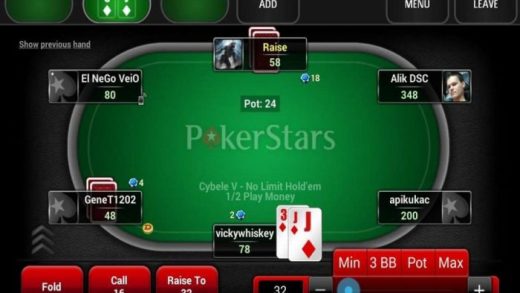
I am proud to be part of an industry that is leading the way in technological innovation. Greece has always been a place of philosophy and logic, and blockchain is the ultimate logical evolution of the game of chance. It removes the “maybe” and replaces it with “certainly.” Whether you are playing a quick round of slots during your commute in Athens or sitting down for a high stakes poker game on a Saturday night, you deserve to know that the game is fair. Blockchain technology is the key that unlocks that certainty.
Conclusion: The New Standard of Integrity
The transition to blockchain technology in the Greek online gaming sector is not a fad; it is a fundamental restructuring of the industry. It solves the ancient problem of trust by replacing human fallibility with mathematical certainty. From provably fair algorithms to smart contract payouts and decentralized data security, the benefits for the player are undeniable.
As a representative of this evolving world, I invite you to step into the light of transparency. Demand more from your gaming platforms. Seek out the math. Verify the results. The future of gaming in Greece is not hidden in a dark room; it is written in a permanent, public, and honest ledger for all to see. The revolution is here, and it is powered by the blockchain. Let us embrace this new standard of integrity together and ensure that the Greek gaming industry remains a world leader in fairness and innovation. The deck is shuffled, the reels are ready, and for the first time, you can see exactly how it all works. Welcome to the era of truly transparent gaming. Welcome to the future of the Greek casino.